
Understand the activity behind the project.
Construction intelligence should help a sales team distinguish a project that was announced from one that is progressing, and decide what that means for its next action.
Request early accessIn development for regional sales, institutional sales and intelligence teams serving India’s built environment.
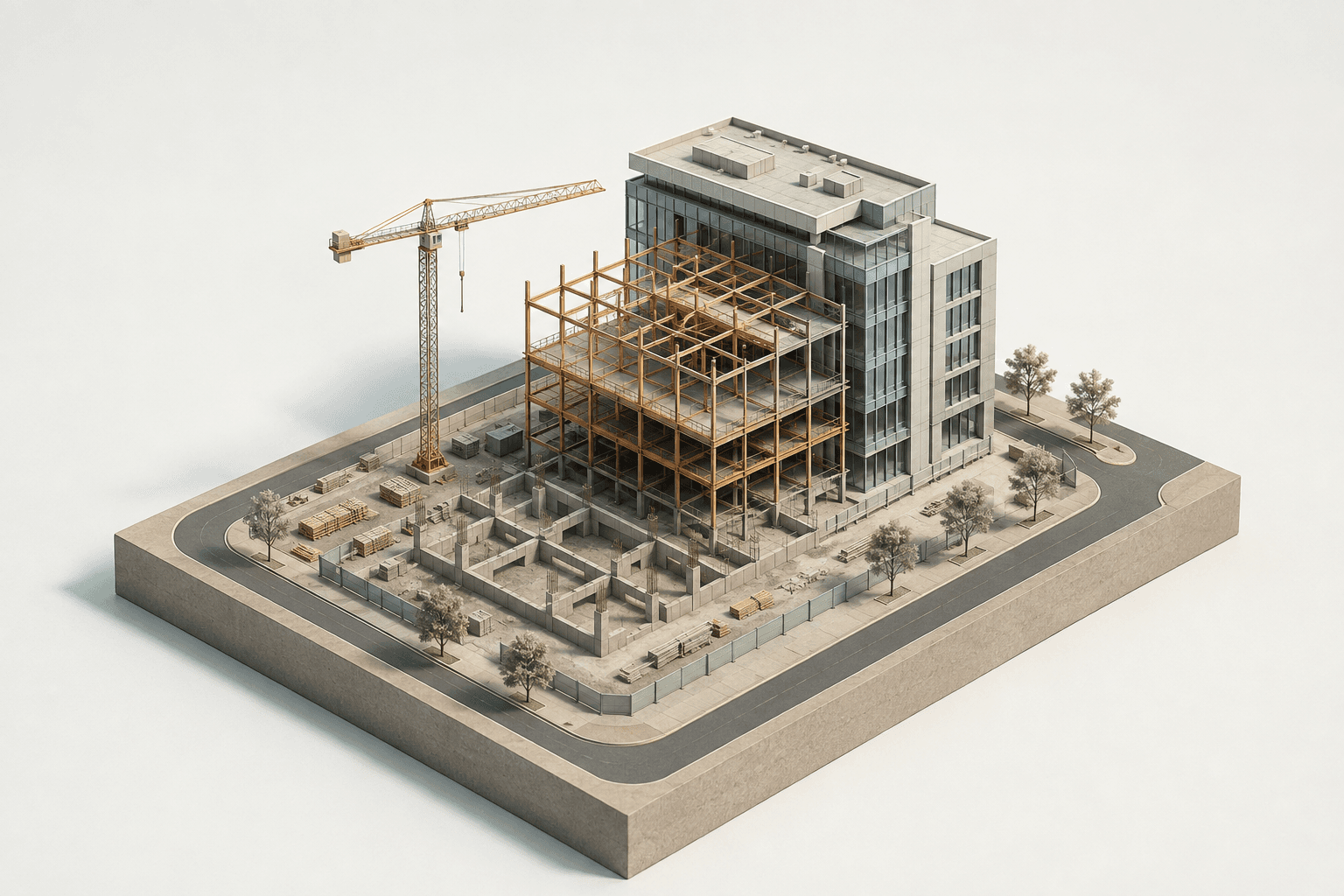
A stage without evidence is just a label.
An approval date, a tender and an observed structure describe different things. Combining them responsibly means keeping the underlying source and its limitations visible. The proposed workflow starts with this evidence discipline.
- Source record
- Keep the original project reference and publication date. An announcement can remain relevant without proving current activity.
- Observed activity
- Describe the visible change without guessing its cause. A new footprint alone does not establish ownership or procurement status.
- Stage interpretation
- Explain why evidence suggests a stage. Record confidence and contradictory information.
- Verification
- Confirm material details through an appropriate primary source or human check, and record the date.
- Territory context
- Aggregate only comparable, sufficiently complete records. Missing coverage must remain visible.
Supplier timing changes as a project moves.
The sequence below is an illustrative sales-planning framework. Procurement can happen earlier, later or through an existing contract, so stage is one input rather than a buying signal on its own.
Groundwork and foundation
May be relevant to earthworks, RMC, reinforcement and waterproofing. Confirm whether supply contracts are already in place.
Structure and enclosure
May bring roofing, facade and building-system questions into view. Specification decisions may already have been made.
Services and finishing
May matter to electrical, HVAC, elevators and finishing materials. Check the actual package scope and purchasing authority.
Same site.
A changing opportunity.
Select a stage to see how the supplier context changes. This is a general planning example, not a live project.
An early material-supply window.
Groundwork and foundation activity can make a site relevant to structural-material suppliers. It still needs a procurement check.
Has the foundation package already been awarded, and who controls material purchasing?
Questions, answered.
Is construction intelligence the same as a project database?
A database stores records. An intelligence workflow adds an explanation of what the evidence means for a specific decision. Many existing databases already provide stages, contacts and analytics; the useful test is whether a new workflow improves your decisions.
How often will project stages be updated?
The pilot cadence will be agreed with its users and matched to source availability. There is no current promise of live or daily nationwide monitoring.
Can this forecast demand across a state?
Not yet. A credible forecast requires representative coverage, stable definitions, appropriate denominators and validation against outcomes. The preview deliberately shows no fabricated activity totals or growth rates.
Where does satellite imagery fit?
It may eventually help identify changes worth investigating. Public datasets, project sources, enrichment and human verification are also needed. The physical-detection engine is not part of this initial release.
Your territory.
A clearer view of opportunity.
Tell us what you sell, where you operate and what your team needs to know. Help shape a focused intelligence pilot.
A conversation about your workflow.
No product subscription required.